Austria's Oversight of Promotional Credits Alters User Flows Between Virtual Card Tables and Accumulating Prize Pools
Ulrich Krüger · Nov 9, 2026
Austria's Oversight of Promotional Credits Alters User Flows Between Virtual Card Tables and Accumulating Prize Pools
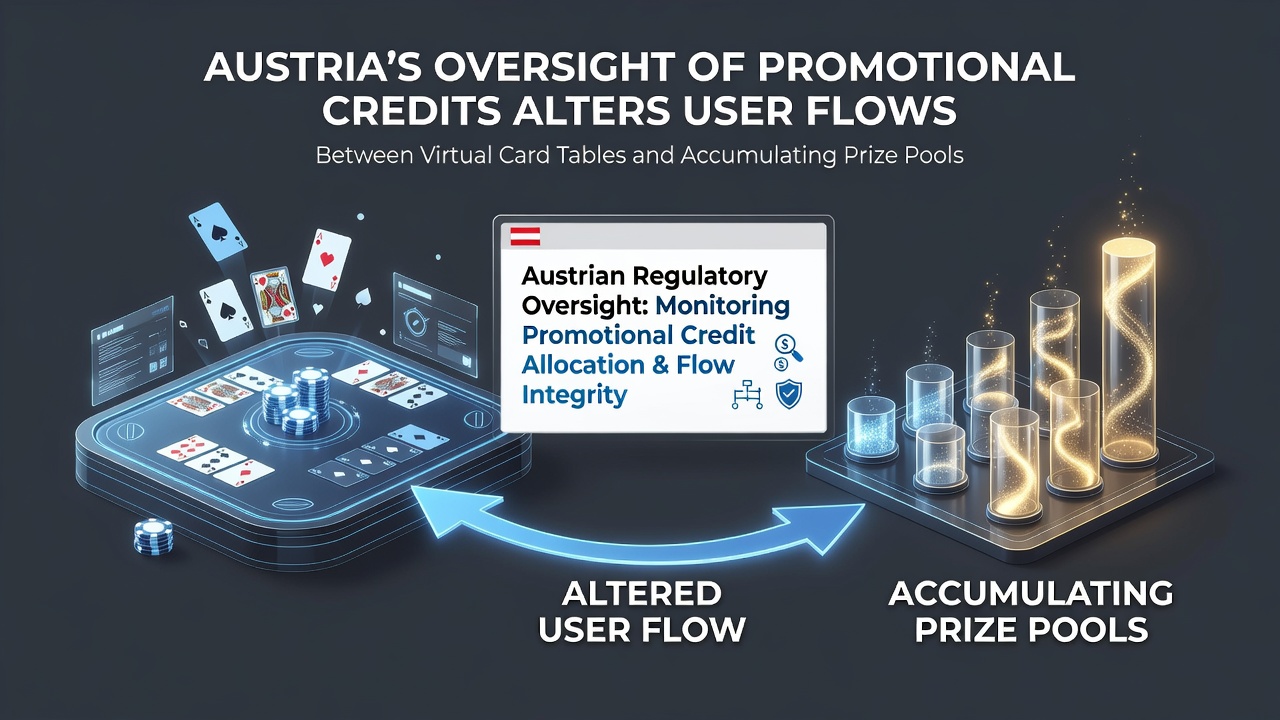
Regulatory adjustments in Austria have reshaped how promotional credits move through online platforms that host virtual card tables and accumulating prize pools. These credits, often tied to initial deposits or loyalty programs, now face stricter tracking requirements that limit their direct application across different game categories. Observers note that operators must separate credit allocation for card-based sessions from those feeding into progressive jackpot systems.
Changes effective as of November 2026 require platforms to log every credit transfer with timestamps and game-type identifiers. This setup prevents automatic rollover from blackjack or poker tables into shared prize pools without explicit user confirmation at each step. Data from the Austrian Federal Ministry of Finance indicates that such logging protocols have reduced cross-category credit migrations by measurable margins since implementation.
Regulatory Framework and Credit Allocation Rules
Austria's updated guidelines on promotional credits emphasize transparency in how these funds interact with live dealer environments and jackpot mechanics. Platforms must now display real-time balances for restricted credits, distinguishing those usable at virtual card tables from those eligible for prize pool contributions. Researchers at the European Gaming Institute documented similar separation protocols in neighboring jurisdictions, where comparable rules led to more segmented player sessions.
Operators comply by integrating API-level checks that flag any attempt to route card-table winnings directly into accumulating pools. These checks trigger mandatory pauses, prompting users to select separate funding sources. Figures from industry reports reveal that compliance costs rose for smaller platforms, prompting some to consolidate their virtual table offerings with streamlined prize pool interfaces.
Shifts in User Navigation Patterns
Players encounter new decision points when moving between card tables and prize pool features. Instead of seamless transfers, the system now requires manual allocation of credits after each table session concludes. This process inserts additional confirmation screens that slow the pace but increase visibility into how funds distribute across game types.
Studies compiled by the University of Nevada's gaming research division show parallel patterns in regulated markets where credit segmentation altered session durations at progressive jackpot games. In Austria, early indicators suggest users spend more time reviewing balance breakdowns before committing credits to card play or pool accumulation. Platforms report higher rates of users opting for dedicated prize pool entries rather than relying on table-derived credits.

Effects on Virtual Card Tables and Prize Pool Dynamics
Virtual card tables operate under tighter credit usage caps that prevent automatic jackpot contributions from table stakes. Accumulating prize pools therefore draw from distinct credit pools that users must fund independently. This separation has prompted operators to redesign lobby navigation so that card table access and pool entry appear as parallel rather than sequential options.
Participation data collected through platform analytics indicate that prize pool entries now originate more frequently from direct deposits instead of table winnings. Observers note that this shift aligns with the November 2026 oversight updates, which aimed to clarify credit provenance across game categories. Platforms that adapted early recorded steadier jackpot growth rates because contributions came from verified, non-table sources.
Platform Adaptations and Compliance Measures
Many Austrian-facing sites introduced segmented wallets to handle the new requirements without disrupting core gameplay. These wallets automatically categorize incoming credits according to their source and intended use, blocking unauthorized flows between card tables and prize pools. Training materials for support teams emphasize explaining these categories to users who encounter blocked transfers.
Industry associations such as the European Gaming and Betting Association have published compliance checklists that highlight audit trails for credit movements. Platforms following these checklists report fewer regulatory queries and smoother operations during peak hours when users frequently switch between table games and jackpot features.
Conclusion
Austria's oversight of promotional credits continues to influence how users interact with virtual card tables and accumulating prize pools through enforced separation and logging. The November 2026 measures established clearer boundaries that operators and players now navigate on a daily basis. Ongoing data collection will track whether these patterns stabilize or evolve with further regulatory refinements.