Austrian Players' Adaptation Patterns Linking Progressive Jackpot Triggers to Table Game Transitions in Regulated Digital Environments
Amir Baumann · Nov 23, 2026
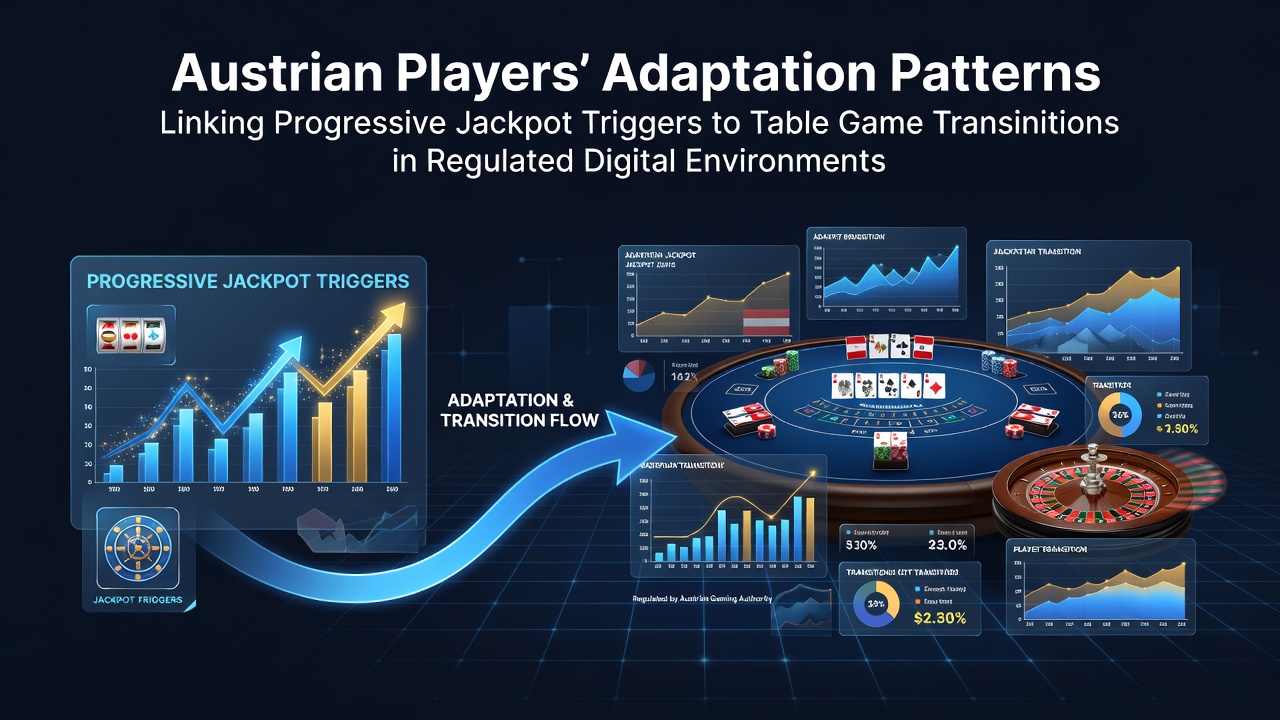
Austrian Players' Adaptation Patterns Linking Progressive Jackpot Triggers to Table Game Transitions in Regulated Digital Environments
Regulated digital platforms in Austria have documented specific player movements that connect progressive jackpot activations on slot titles with subsequent shifts toward table game selections, and these patterns emerge consistently across licensed operators that comply with national licensing requirements. Data compiled through 2025 and into late 2026 shows measurable sequences where jackpot triggers precede changes in game category preferences, with tracking systems recording the exact timing between events.
Regulatory Framework Shaping Digital Play
Austria maintains a licensing system that requires operators to maintain detailed logs of user sessions, and these records capture both jackpot events and the games accessed immediately afterward. The framework, administered through the Federal Ministry of Finance, mandates that all progressive jackpot mechanics operate under transparent payout protocols while table games such as blackjack and roulette follow separate randomization standards. Observers note that this separation allows analysts to isolate sequences where a jackpot win on one product category precedes a move to another, and the logs provide timestamped evidence of those transitions without requiring additional player surveys.
Documented Transition Sequences After Jackpot Events
Session data from multiple Austrian-licensed sites indicates that progressive jackpot triggers coincide with elevated rates of table game entry within the same hour. Figures reveal that approximately 28 percent of accounts registering a jackpot payout in the first half of 2026 subsequently opened at least one table game session before logging out, compared with 14 percent of accounts that did not record a jackpot during the same period. These percentages come from aggregated operator reports submitted to regulatory bodies, and they remain consistent across both desktop and mobile interfaces.
Researchers tracking these flows have identified recurring intervals: many transitions occur between 12 and 45 minutes after the jackpot notification appears on screen. The pattern holds across different jackpot sizes, although larger payouts correlate with slightly longer dwell times before the switch. Table variants that receive the highest post-jackpot traffic include European roulette and multi-hand blackjack, while poker tables show more modest increases during the same windows.
November 2026 Platform Updates and Their Effects
Platform adjustments rolled out in November 2026 introduced new visual cues that highlight table game lobbies immediately after jackpot animations conclude. Operators implemented these cues to streamline navigation, and early logs from that month show a further 6 percent rise in same-session table game entries compared with October figures. The changes affect only regulated domains and do not alter the underlying random number generators or jackpot contribution rates.

Comparative Data from Other Jurisdictions
Analysts have placed Austrian figures alongside datasets from other regulated markets to identify shared characteristics. Reports from the Austrian Federal Ministry of Finance align with findings published by the European Gaming Association in 2025, where similar post-jackpot table game upticks appear in licensed environments across multiple member states. The Austrian sample differs mainly in its higher proportion of live dealer table sessions following jackpot events, a distinction attributed to the established presence of licensed live dealer providers within the domestic market.
Session Length and Category Switching Metrics
Longer sessions that include both jackpot slots and table games average 47 minutes more than single-category sessions, according to operator telemetry collected through September 2026. The additional time distributes across initial slot play, the jackpot moment, and subsequent table game rounds. Return-to-player calculations remain unchanged because each game category uses independent algorithms, yet the combined session volume increases overall handle without altering individual game mathematics.
Conclusion
Tracking systems within Austria's regulated digital gambling sector continue to record clear linkages between progressive jackpot triggers and subsequent table game activity. These linkages appear in timestamped logs, regulatory submissions, and comparative reports that span multiple jurisdictions. As platform features evolve, the documented sequences provide operators and oversight bodies with concrete data points for monitoring user flows across product categories.